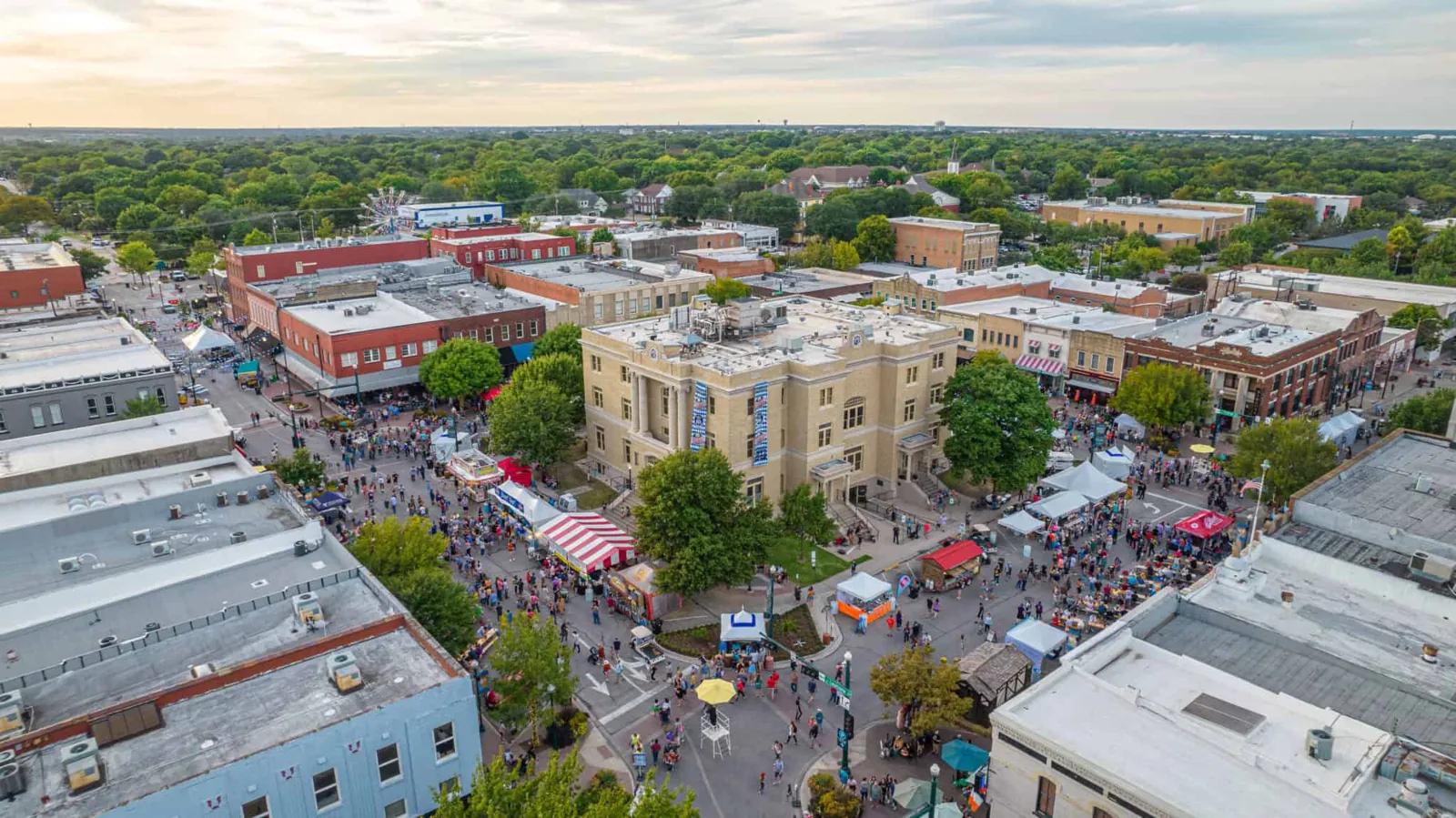
Hotel roof repair, recover and replacement in McKinney, TX, planned around guest rooms, quiet hours, check-in times and North Texas hail and heat.
Tell us about the building and what you are seeing. We reply with the next practical step.
A wet ceiling in a guest room costs the room for the night, and if the water travels, the rooms on either side go with it. That is why a hotel roof call begins on the floor below: which rooms are affected, which are booked, and which are already out of service. We follow the wet path from the stain to the nearest bath exhaust, parapet, drain or wall joint, and agree on a work zone that leaves the porte-cochere, the entrance and the pool deck open. For a hotel in McKinney, TX, a roof schedule is a room-nights schedule, and the repair boundary is drawn around what the front desk can still sell.
Hotels carry a long row of small penetrations. Every guest bath has an exhaust vent, plumbing stacks run through each stack of rooms, and a laundry or kitchen adds larger ducts. Each penetration is a flashing detail that has to hold for years, and each is a point where water can enter and travel along a ceiling before it appears.
We count the vents over the affected floor, probe their boots and look at the membrane between them. A stain in a corridor may trace to a vent two rooms away. Marking the room numbers on the roof plan lets housekeeping and maintenance see which rooms to block, and shows the owner exactly how far the problem has spread.
Laundry and kitchen exhausts deserve a separate look. They run hot and wet, they carry lint and grease, and the roof around them takes both. A lint-clogged termination can push damp air back into the attic or ceiling space, which stains drywall the same way a leak does. We confirm whether a stain comes from the roof or from the exhaust before cutting into anything, so the repair addresses the right cause.
Guests sleep late, work early and complain about noise at both ends. Tear-off, power tools and compressors are loud, and a crew above a sleeping floor will draw complaints within minutes. We set work hours with the general manager so the loudest tasks sit in the middle of the day, after checkout and before the afternoon arrivals.
Where the building can spare a floor, the best approach is to close the rooms directly below the work zone for the duration of the repair. Block booking is cheaper than refunds and bad reviews. When the roof must be worked over occupied rooms, we limit tools to quieter methods, such as hot-air welding and adhesive attachment, and keep a contact number for the front desk on the roof.
The roof of a hotel is not one surface. A flat main roof meets a porte-cochere canopy, a covered walkway to a pool, and sometimes a mansard or a pitched feature that gives the front its look. Each has its own failure points: the canopy edge where fascia and gutter meet, the mansard where steep and low-slope sections join, and the walkway cover with a deck exposed to sun.
Guest-facing zones take precedence. We schedule work on the entry canopy and the walkways for the hours with the fewest arrivals, put up barricades with clear signs and set a spotter at any lift. A skylight or atrium opening in a lobby gets its own flashing review, since a leak there lands where guests see it first.
Rooftop amenities change the plan again. A terrace, a bar or a pool deck on a roof sits over a protected membrane with pavers or decking, and any leak below requires lifting that cover. We map what must be moved, who removes it and how it is stored, then rebuild the surface to the owner's finish.
A hotel roof in July is hot enough that crews start at first light and stop in the afternoon, with regional highs averaging 95.6°F that month and 95.8°F in August. The same surface that bakes in summer is the one that takes spring hail: the National Weather Service places the Metroplex's stormiest stretch in spring, with large hail, damaging wind and flooding.
After a storm we check the guest-room roof first, then canopies, then equipment. A hail damage roof repair starts with documentation, so the hotel can show its insurer which areas were hit and how the rooms below were affected. We provide dated photographs and a map of impact marks, which supports the claim and the repair plan alike.
A hotel roof near US 75, SH 121 or US 380, the highways McKinney calls its principal routes, is reached by trucks coming off those roads. Plano planning lists hotels among the uses along its expressway corridors, and Addison reports more than 3,000 businesses including hospitality. A lodging roof in Plano or in the US 75 and SH 121 district of McKinney meets the same weather and the same access questions, so the inspection follows the same steps.
That mix shapes the lift plan. A hotel next to other businesses may share a lot or a drive lane, so the crane pad, the staging area and any lane closure get approved with neighbors ahead of the date. Site access and roof access still have to be confirmed at each property, and we walk the grounds with the property engineer before the first delivery.
A full reroof on a multi-story hotel goes wing by wing. We open one section, dry it in, test the seams and move on. A reroof on an occupied building also requires a plan for debris chutes, material hoists and noise, since guests can see and hear everything. For a PVC roofing membrane, heat-welded seams give a quiet install and good chemical resistance near kitchen and laundry exhaust.
The closeout record lists the wing, the membrane, the drains and the curbs, with photographs. It lets the owner or the hospitality group compare each property, and it supports a franchise inspection. A related file applies to apartment buildings, where residents rather than guests sit below the work, and to a restaurant roof on the same site.
Weather holds are common on a long hotel job. When hail or a squall line is forecast, the open section is sealed, the staging area is cleared of loose materials and the crew leaves the roof. We log each hold with the date, the reason and the section left open, so the general manager can see what was protected and when work resumed. A hotel cannot afford a flood in a room it just sold, and the log is the evidence that the roof was never left exposed overnight.
Tell us which rooms show the stain, how full the building runs and where the roof ladder is. We will plan the inspection around the front desk and housekeeping.
Short answers to what owners and facility managers ask before a roof visit.
Rooms under the active wing should be blocked. Rooms in other wings can stay open as long as noise and debris stay away from them.
We map the wet path from the stain to the nearest penetration, then mark the rooms along that path on the roof plan.
The stretch after checkout and before most arrivals. Early mornings and evenings stay quiet for guests.
It can. Covers and canopies are lighter than the main roof, so we inspect them with the roof after each large storm.
A written closeout with photographs by wing, the system installed and the drain and curb checks. It shows condition and the work done.
Send a question about the building and we will reply. Or call 555-555-5555.