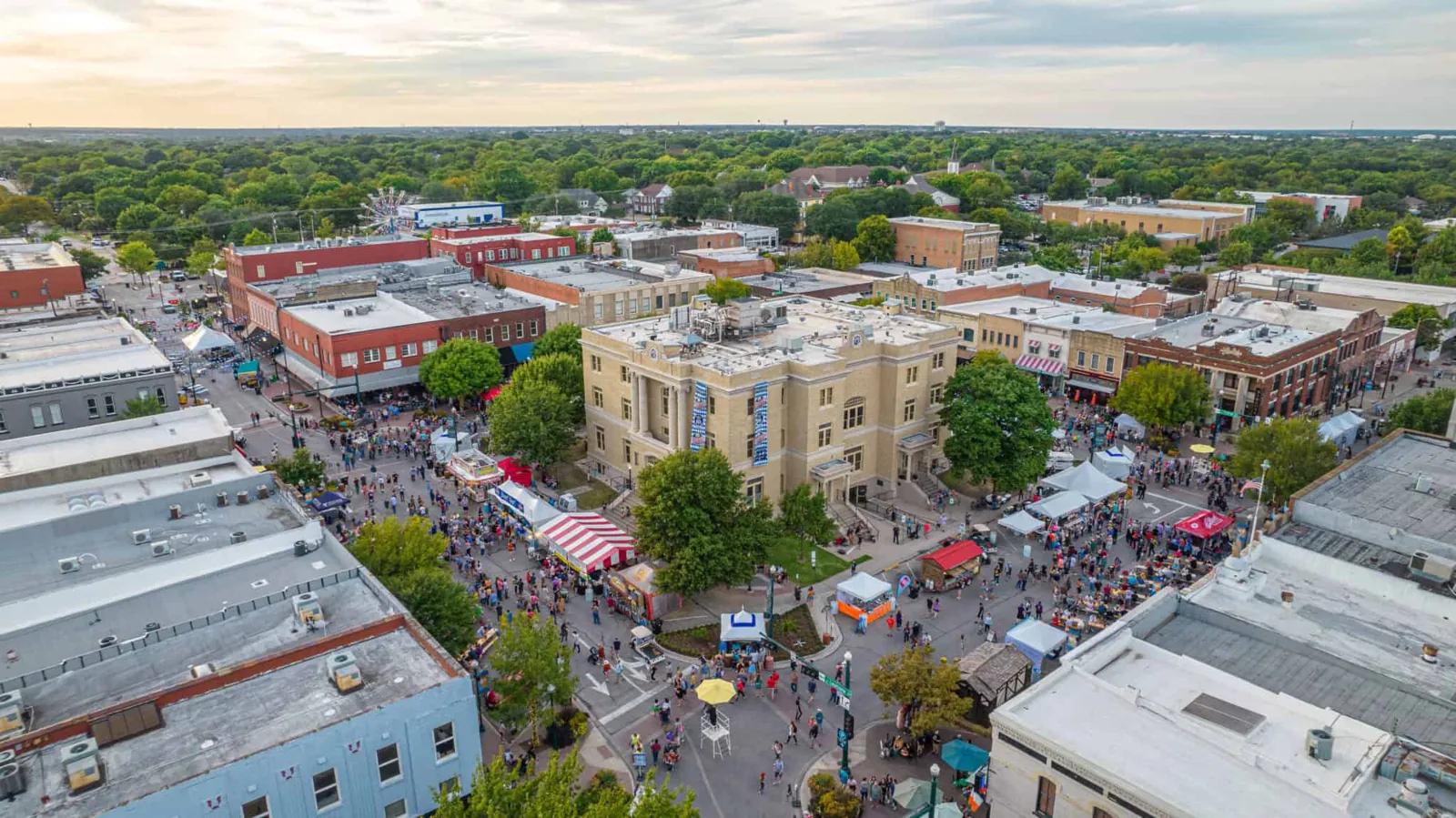
Distribution and fulfillment center roof repair and replacement in McKinney, TX, sequenced around shifts, dock doors, trailer yards and sorting equipment.
Tell us about the building and what you are seeing. We reply with the next practical step.
A leak above a sortation line costs more per hour than the repair does. In a distribution or fulfillment building the roof problem is rarely the first call; the first call is a conveyor stopped, a pick aisle taped off or a dock door held open while water is mopped. Before any membrane is chosen, the roof inspection has to find the point where water enters and decide whether a crew can reach it without crossing live traffic.
We repair, recover and replace roofs on distribution and fulfillment centers in McKinney, TX, in a city of office and industrial parks served by US 75, SH 121 and US 380. Tell us which bay is dripping, how many shifts the building runs and where the trailer yard allows a lift, and the inspection will be planned around that schedule.
Distribution roofs tend to be broad and flat with perimeter parapets, a limited number of drains and a scatter of rooftop units, vents and smoke hatches. The layout matters more than the age. If the roof was built to drain toward a few outlets, a clogged strainer or a curb across the flow route puts water on a large area at once. Water that stays on a wide roof adds load, accelerates seam wear and finds the first weak penetration.
During the first walk we map the roof into work zones that match the bays below, so that a stain on the floor can be traced to a roof area with a number. For each zone we record the membrane type, the attachment, the seam condition, the flashing details and the drain path. That map is what lets the facility director talk to a general contractor, an insurer or an operations manager about the same location in the same words.
An owner in the US 75 and FM 543 District or on Hardin Boulevard and US 380 should know that city overviews describe highway context and not any single roof, so each building is walked before the scope is written. A cold storage roof or an office wing on the same property gets its own notes.
Dock courts are crowded places. Trucks back in, trailers sit in the yard, forklifts cross the apron and pedestrians walk between parked loads. A lift or crane on that apron needs a defined work zone, spotters and a schedule that avoids peak departures. We ask for the shift calendar, the busiest dock hours and the yard rules, then pick lift locations, debris routes and material drop zones that stay clear of the flow.
Inside, the building may have racking against exterior walls, conveyors under roof penetrations and sprinkler piping under the deck. We agree on interior protection and which zones can be cleared. Roof work can often be sequenced to follow the building's quieter shift, and the leak response line stays staffed whenever a section is open. The occupied shift, not the membrane, is the constraint that sets the order.
Fire lanes, dock seals and sprinkler risers also constrain the plan. Staging can never block a fire lane, and debris chutes cannot drop over a dock door that is in use. We walk the apron with the site manager, mark no-go areas and confirm the leak response contact for every shift that overlaps roof work.
Normal afternoon highs in Dallas-Fort Worth reach the mid-90s in July and August, and a flat dark roof runs hotter than the air. Crews start early and stop when surfaces get too hot for adhesives and welds, which makes the day shorter on a large roof. Those normals describe the region and not any one building.
Spring is when the Metroplex sees its worst weather, the Weather Service says, and a roof can meet hail, strong wind, flooding or a tornado warning in a single season. Open roof sections do not wait for the forecast to clear, so each section is dried in before a shift ends and temporary protection is staged for the rest. After a storm we inspect for bruising, lifted edges and wet insulation, and we separate storm marks from age. The storm damage roof repair record keeps that separation clean for the claim file.
Large flat roofs commonly use single-ply membranes such as TPO roofing or PVC, with EPDM or modified bitumen on some buildings. Mechanically attached sheets go down quickly, which shortens the disruption. Fully adhered sheets cost more labor but suit some decks and wind conditions. A coating can restore a sound roof, though it needs a dry substrate and repaired seams first.
What matters for a distribution center is how fast an opening can be closed and how well the roof tolerates service traffic. Walk pads along equipment routes, extra attention at curbs and the number of penetrations all affect repair frequency. Where a section of roof is wet, an infrared moisture survey maps the extent, so the tear-off limit is drawn on test evidence.
Insulation and cover board get as much attention as the surface. A firm board resists the point loads from service traffic and from hail, and insulation thickness is set by the energy code. Parapet and door heights are measured before ordering so the new assembly does not trap water at a threshold.
Local seam, flashing or puncture defects on a roof with dry insulation call for a focused commercial roof repair. A sound, dry roof with an aged surface may take a recover, which shortens tear-off and noise over the floor. A roof with wet insulation across large areas, or a deck that is damaged, needs removal of the affected assembly.
The decision carries cost drivers: area, wet insulation, penetration count, drain count, access and the production window. Night or weekend hours add labor, and phased openings add mobilization. The permit brings in the adopted building and energy codes and their amendments, which fixes insulation, reflectance and wind items ahead of any replacement price.
The closeout file holds photographs by work zone, attachment and seam details, drain checks, moisture results and product data. For an operator with several buildings, that file turns into a comparison tool. A multi-site roof program ranks roofs by condition and schedules work in the slow weeks of each building's calendar, and a warehouse roofing record for a nearby storage building can be reviewed in the same format. A preventive roof maintenance visit before spring storms clears drains and checks seams.
Share the affected bay, the shift calendar, the trailer yard rules and the roof access points. We will trace the water and sequence the work around the building's workday.
Short answers to what owners and facility managers ask before a roof visit.
Often. We sequence sections over quieter areas, protect the floor below, keep a leak response line open and close each opening before a shift ends.
Lifts, debris routes and material drops all need space that is not shared with trucks. We set the work zone around the yard's flow.
We number work zones to match the bays below, trace the stain to its zone and check the seams, curbs and drains in that area.
It can be, if the substrate is dry and sound. It shortens demolition and noise, but wet insulation rules it out.
The affected bay, the shift calendar, the yard rules and the roof access points. Those four items shape the inspection.
Send a question about the building and we will reply. Or call 555-555-5555.