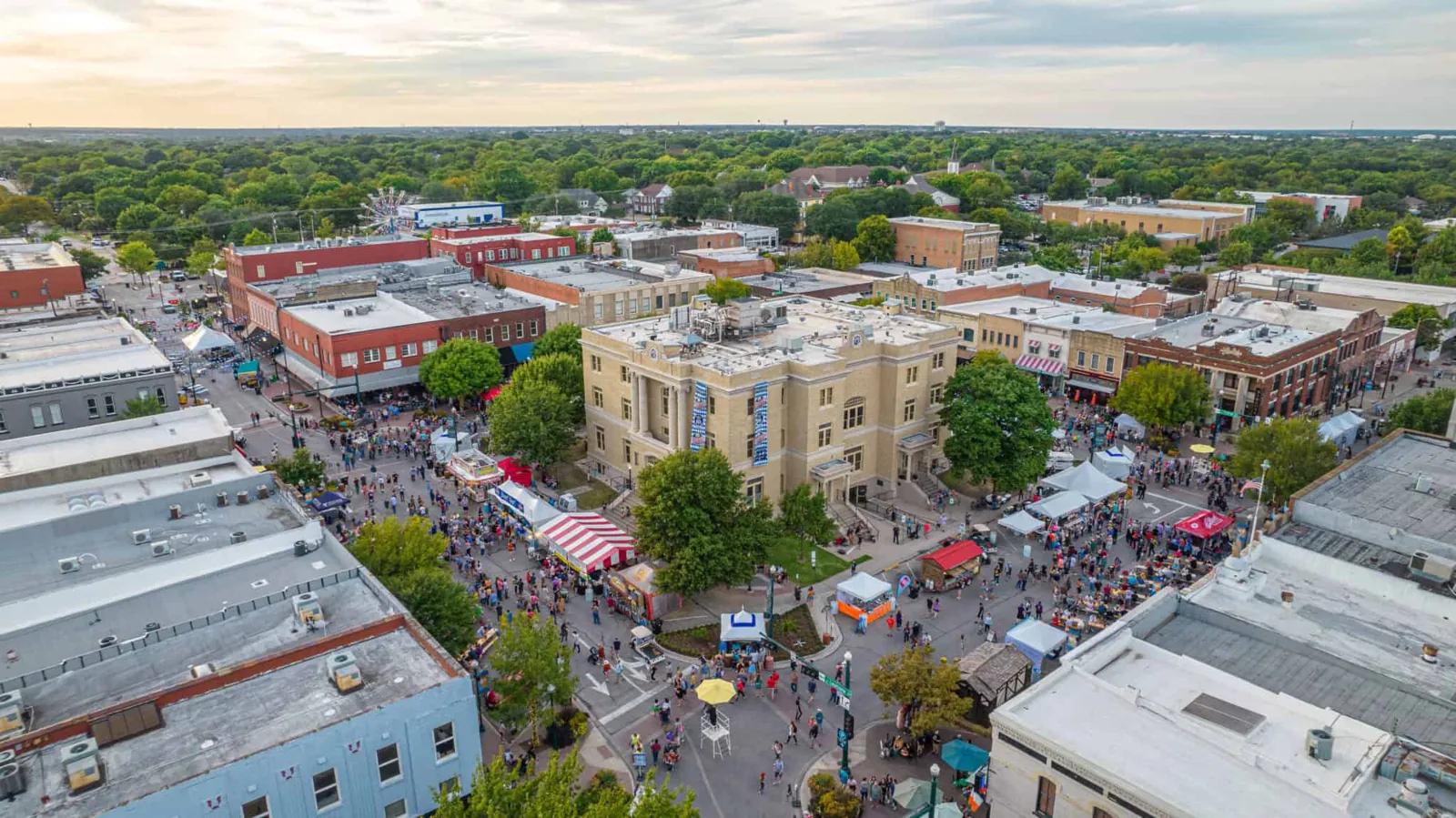
One roof program across many buildings near McKinney, TX: shared inspection routes, a common report format and repairs sequenced around each site's limits.
Tell us about the building and what you are seeing. We reply with the next practical step.
Ten buildings on ten different schedules produce ten different leak calls, and the only way to keep up is a program with one format. For a facility director in McKinney, TX, whose portfolio reaches into Plano, Frisco, Allen and beyond, a multi-site program puts every roof on the same inspection route, the same grading scale and the same record. The first check separates sites that need repair this quarter from sites that need only their next scheduled visit.
The City places McKinney with access to Interstate 20, 30, 35 and 635 within about 30 minutes, and that reach shapes how a portfolio is served. Freight and crew routing still depend on each building's actual approach and restrictions, so the program records site-level access, not just the address.
A program begins with a walk of every roof. We use the same checklist, the same photograph order and the same grading scale at each site, so a zone graded repair soon in Allen means the same as one in Frisco. The grades go into a single table that shows the portfolio at a glance.
Sites differ in type. The City describes office and industrial parks across McKinney and retail districts including Historic Downtown and several highway-oriented areas, and the cities around it have their own mix. A retail center, an office building and a light-industrial building each have different roof uses, and the checklist adapts without changing the scale.
The table highlights outliers. A site with repeated leaks, a roof with wet insulation or a building with an expired warranty rises to the top, and the director can see where attention belongs. The full asset record sits behind the table for each site.
The first visit also sets baselines. Photographs of every drain, edge and penetration at every site give the program a starting point. When a storm passes or a leak is reported, the baseline shows what changed. Without it, every claim and every repair starts with an argument about what the roof looked like before.
Every site has a one-page access sheet: roof hatch location, ladder or lift needs, key holder, hours, restricted areas and contacts. The sheet follows the crew. A technician arriving at a site for the first time can find the roof, reach the right person and avoid the wrong area.
Operating limits go on the same sheet. A restaurant kitchen, a production aisle, a medical suite or a data room each sets rules for noise, dust and timing. The sheet records them, so a repair at one site does not accidentally break the rules of another.
Emergency routing is part of the program. When a leak call comes in, our emergency roof repair line works from the site sheet: the room, the floor, the roof route and the person to call. The first visit starts with the right facts, not a round of phone calls.
A program sets repair standards once and applies them everywhere. The standard names the materials, the details and the testing for each roof system in the portfolio. A patch on a TPO roof in one city follows the same method as a patch on a TPO roof in another.
The standard also defines the repair boundary: when a repair is a patch, when it becomes a section repair and when it signals a larger project. Those thresholds let the director compare sites. A roof that crosses the threshold moves to the capital list, and capital planning takes over.
Warranties are tracked in the program. Each site's terms, expiry dates and conditions sit in one file, and repairs are routed to keep coverage intact. The warranty management work prevents an inadvertent breach at any building.
Approvals follow a simple rule. Small repairs inside the standard proceed on the director's authorization. Larger repairs get a written scope with the evidence, and the director approves before work starts. Site managers know which calls they can make and which go up, so repairs do not wait on questions that have already been answered.
The program runs on a calendar. Every site gets a drain and edge check before spring, because hail and wind season peaks then across the Metroplex. After a major storm, the route shifts to the sites in the affected area first, and the baseline photographs make damage easy to see.
Summer brings heat checks. By midsummer, sealants, boots and membranes show what the heat has done. A midsummer route catches those items before the fall. May brings the heaviest rain of the year, so drains are cleared ahead of it.
A calendar also helps with crew scheduling. Sites close to each other can be grouped into clusters, such as Plano and Richardson or Allen and Frisco, so one crew can cover a cluster in a day. Fewer trips mean lower cost per visit and faster response.
Heat and storm seasons also set staffing. Spring route days are reserved for post-storm checks, and summer days are reserved for coating and sealant work that needs dry mornings. A director who sees the calendar early can plan tenant notices and access permissions well ahead of the crew.
Few portfolios share one roof type. A program may include TPO, PVC, EPDM, modified bitumen, metal and coated roofs. Each system has its own watch items, repair methods and aging behavior. The program keeps those separate while using the same grades and records.
Equipment shows up everywhere. Rooftop units, exhaust fans, skylights and penetrations create recurring leak points, and the program tracks them by site. A pattern across several buildings, such as the same model of curb failing, points to a standard fix.
When a roof reaches the end of a coating's useful life or needs replacement, the program carries the evidence to the decision. Photographs, moisture results and repair history from earlier visits make the case. Directors do not start from zero.
Changes in the portfolio are handled the same way. When a building is added, we walk it and build its page in the record. When a building is sold, its file is exported with the owner's permission so the next owner starts with history instead of a blank folder.
Reports follow the calendar. A quarterly summary lists visits, repairs, open items and grade changes. An annual report ranks the portfolio and feeds the budget. Each site file stays current, and the director can open any building's record in a minute.
Owners with locations in Plano, Frisco or Wylie, where the economic-development office describes a logistics and intermodal area with access to the CPKC terminal, can fold those sites into the same program. Reports are written so lenders, insurers and buyers can read them without a walk. Condition reports supply the site-level detail.
Send the addresses, hours and access rules for each building. We will walk the roofs, build the access sheets and set a route around your schedule.
Short answers to what owners and facility managers ask before a roof visit.
Two or three buildings are enough to benefit from one format. The value grows with each site added.
Yes. We group nearby sites into clusters and schedule visits by route. Access sheets keep each site's rules clear.
We can inspect and record the roof regardless of who repairs it. The file shows repairs from any contractor.
Through the site sheet. The emergency line starts with the room, the floor and the roof route, so the first visit is productive.
A summary of visits, repairs, open items and grade changes, plus updated site files.
Send a question about the building and we will reply. Or call 555-555-5555.