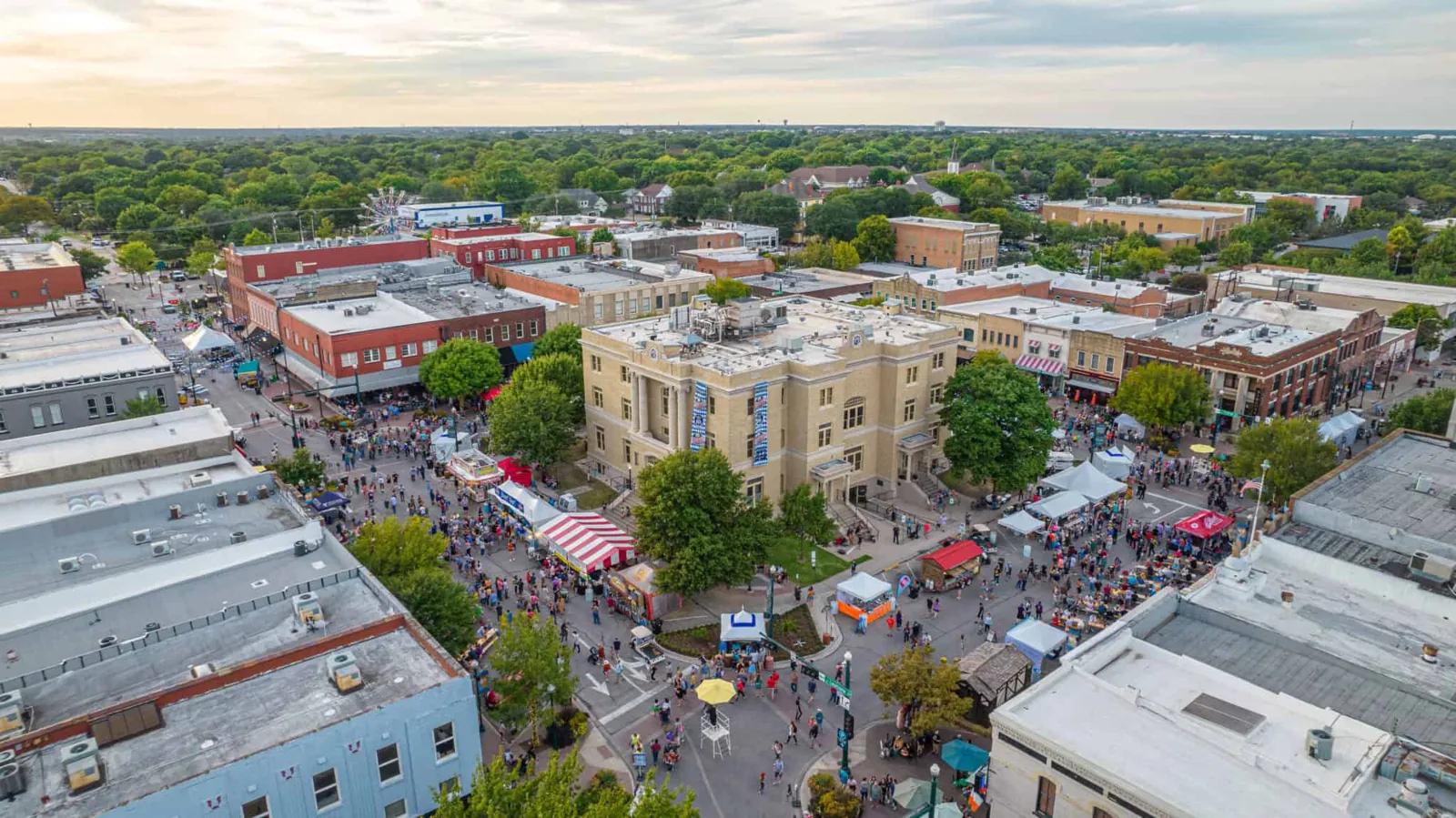
Gym, rec center and fitness facility roof repair and replacement in McKinney, TX, covering humid air, pool halls, early opening hours and class schedules.
Tell us about the building and what you are seeing. We reply with the next practical step.
A drip onto a rubber gym floor stops a class, and a drip over a cardio row stops a membership renewal. The roof of a fitness building also works under a harder load than most: wet air from showers and pools pushes upward, big rooftop units push warm air out, and the interior is one tall volume with no ceiling to hide a stain. We start at the wet spot, trace the path to the seam, curb or drain above it, and mark the work zone so classes and early-morning members keep access. At a gym or recreation center in McKinney, TX, the first call is whether the water is rain, condensation or both.
Showers, saunas, pools and heavy sweat load the air with moisture. In winter, that humid air rises to the roof deck and meets cold metal or insulation, then condenses and drips. The stain looks like a leak, but the membrane is intact. If we repair a roof that is not leaking, the stain returns, and the owner pays twice.
We check the interior side first. A missing vapor barrier, a gap at a penetration or an exhaust that dumps into the ceiling space can push moisture into the assembly. Where the roof is truly failing, wet insulation shows up on an infrared survey as a cool patch against the dry field. The two causes are repaired differently, and the finding tells the owner which one is at work.
Exhaust placement is worth a walk. Locker room and shower fans that discharge into an attic or a ceiling space add moisture to the very assembly the roof is meant to protect. We trace each duct to its termination, check that the cap is sealed to the membrane and report any fan that vents short of the roof. A duct fixed at the source costs far less than repeated membrane repairs.
A pool hall is the hardest environment in a fitness building. Chlorine and chloramines corrode fasteners, flashings and metal decking from the inside, and the ceiling cavity stays warm and wet year-round. We inspect the steel and the fastener heads for rust, and the underside of the deck where it is reachable.
A membrane that tolerates chemical exposure, such as PVC roofing, is a sensible choice near pool exhaust, because it resists many chemicals that attack other sheets. Exhaust termination matters too: air that is discharged near the roof surface blows fumes across the membrane, so we check that fans carry air away from it. The ventilation contractor coordinates with us so ducts and roofing are finished together. A hotel with a pool and a fitness room has the same exposure, and the notes on a hotel roof carry over.
Many fitness buildings open before sunrise and close late. The slow stretch is mid-morning or early afternoon, and that window usually suits roof work. We ask for the class schedule and mark the rooms below the work zone, so the loudest tasks avoid a yoga room or a cycling studio.
Noise is a real issue in a gym, where members come for calm or for focus. Compressors, generators and cutters carry through a lightweight roof deck. For a recreation center that serves children and older adults, a posted schedule helps staff plan around the work. If a pool or a track has to close for a few hours, the manager decides the time and we align the lift plan and tear-off with it.
Members' safety comes first. Barricades and a spotter protect the entrance and the parking row under any lift, and walkways stay open during opening hours. Staff receive a short note listing the work zone, the times and a phone number, so the front desk can answer questions without calling us.
Gyms and recreation centers use daylight, so skylights and clerestory windows are common. Their curbs and glazing seals age faster than the roof field. Sealant dries, frames expand and contract, and condensation inside a skylight can be mistaken for a leak. A skylight and penetration flashing repair resets the curb, replaces failed seals and checks drainage around the opening.
Tall wall joints are another weak point. Where a high gym roof meets a lower wing, the step flashing is long and exposed, and wind and hail work on it first. We inspect those joints from a lift or a drone, and we repair them before the next storm season.
Large wall panels and translucent roof sections on some recreation buildings let in light and heat together. They yellow and crack under sun, and their end laps loosen over time. We replace cracked panels, reseal the laps and check the framing under them for rust, since a leaking panel often hides a corroded purlin.
The Metroplex's severe-weather peak comes in spring, the National Weather Service notes, with large hail, damaging wind, flooding and tornadoes. A big, open roof is an easy target for hail, and dehumidification units and rooftop air handlers can sit in the middle of it. July and August afternoons average 95.6°F and 95.8°F, and the equipment works hardest in the same weeks.
We check the curbs and the membrane around the units after each storm, then the field. Foot traffic from technicians wears the membrane around them, so we recommend walkway pads and raised supports. A cool roof surface reduces heat on the roof deck and eases the cooling load when installed on sound insulation.
After a storm, the first checks are the ones that stop interior damage: drains, curbs and the gym floor below. Rubber flooring and sprung wood floors both suffer from water, and drying them quickly saves a replacement.
Murphy identifies The Corridor as a broad commercial district along FM 544, Little Elm lists commercial retail corners along Eldorado Parkway, FM 423, FM 720 and US 380, and McKinney names Hardin Boulevard and US 380 among its retail development areas. A gym in one of these corridors may sit within a larger shared roof. A club in Murphy, Little Elm or the Hardin Boulevard and US 380 district gets the same walk: pool air, drains, and class schedules first.
When a gym shares a roof with neighbors, the landlord, the other tenants and the gym operator each have a stake. We write the finding so each sees the part that affects them, and we sequence the work so the gym keeps trading. A related roof such as a school gym follows the same plan.
Send the room under the stain, the hours the building is busiest and the roof access point. We will plan the inspection so members and classes keep their time.
Short answers to what owners and facility managers ask before a roof visit.
Condensation appears in cold weather, near metal and vents, and does not follow rain. A moisture survey and an interior check separate it from a membrane leak.
A chemical-resistant sheet such as PVC, with fans set to discharge away from the surface, and corrosion-resistant fasteners.
Usually. We work above quiet areas during busy hours and close only the rooms under active tear-off, with the manager picking the times.
Sealant dries and frames move, so the curb and glazing seals fail before the field does. We reset the curb and replace seals.
Yes. Fins and coils can bend under hail, and curbs can crack. We inspect the units and their flashing after each large storm.
Send a question about the building and we will reply. Or call 555-555-5555.