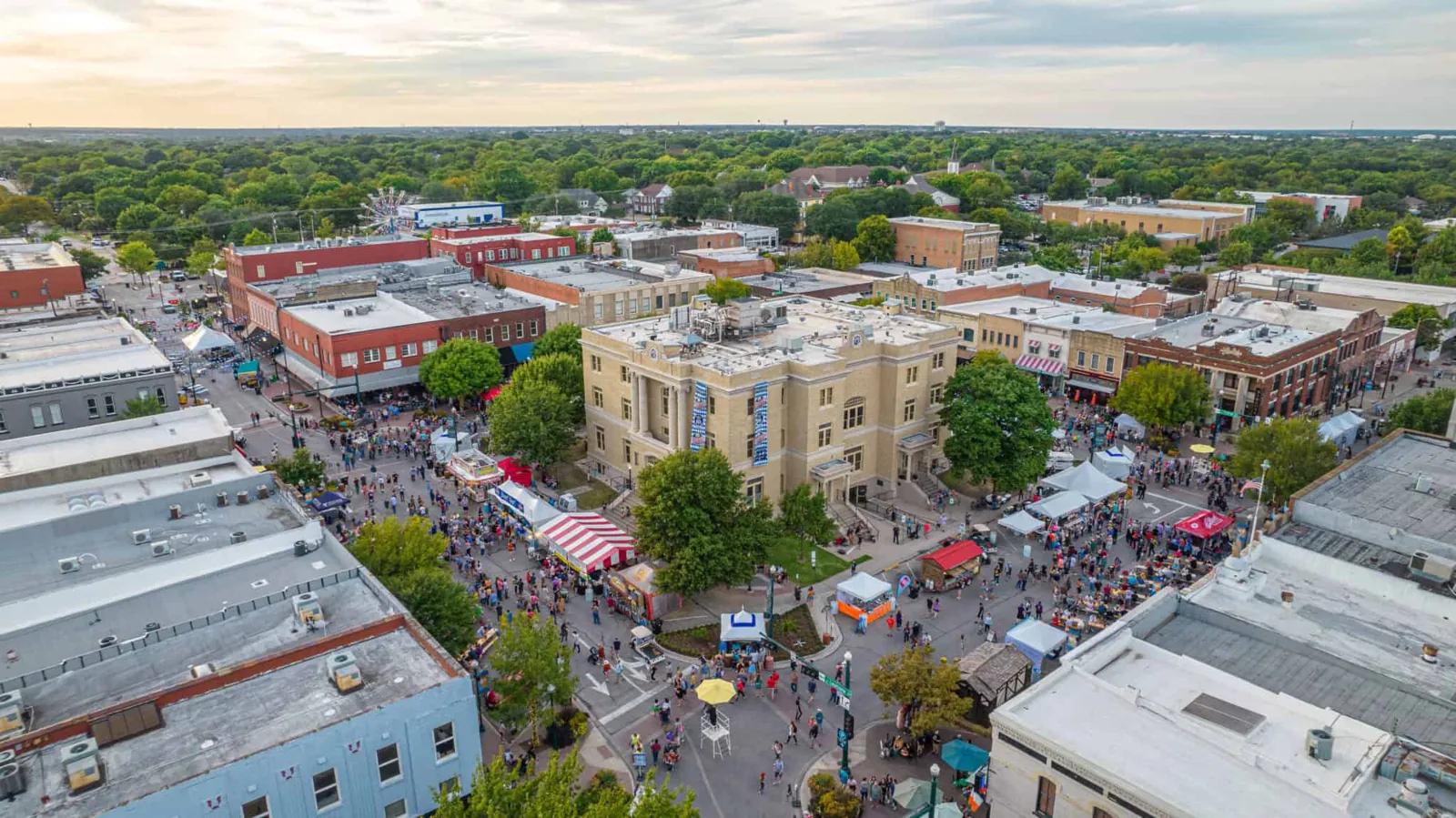
Standing seam metal roof installation, repair and restoration for McKinney, TX commercial buildings, with clip, seam and penetration checks and lift planning.
Tell us about the building and what you are seeing. We reply with the next practical step.
A standing seam roof leaks at its terminations long before it leaks in a panel. Where a ridge cap, a wall flashing, a curb or a pipe boot meets the metal, thermal movement and sealant age work together, and the first walk on one of these roofs goes along every end lap, every penetration and every row of exposed fasteners at the eaves. What turns up there decides whether the call is a sealant repair or a panel and trim conversation.
We install, repair and restore standing seam metal roofs on commercial buildings in McKinney, TX, including retail, office and industrial buildings. To plan the inspection around the workday we need three things first: where water appeared, when people are in the building and how a crew gets to the roof.
Standing seam describes a metal panel with raised vertical seams that interlock along the length of the roof. The panels are fastened to the structure with clips hidden under the seam, which means that no screws pierce the panel face. The clips allow the panel to expand and contract along its length, a feature that matters in a climate where the surface swings from cool nights to hot afternoons. Seams are either snap-locked or mechanically seamed with a tool that folds them closed.
Panels are steel or aluminum, painted or coated, and installed over a solid deck with an underlayment or over purlins with insulation below. The roof sheds water by slope and by tight seams, not by a continuous membrane, so slope, seam closure and end details carry the load. Each panel is cut to length, and the long runs show every flaw in alignment.
A long panel can move a noticeable amount between a cold morning and a hot afternoon. In Dallas-Fort Worth normals the hottest afternoons reach the mid-90s, a regional figure and not a reading from any roof, and the surface temperature of dark metal in direct sun is well above air temperature. Clips are meant to slide, and trim at ridges, eaves and walls has to leave room for that motion. A fixed trim piece, a clip that was bound by a sealant or a panel pinned at both ends will tear at its fasteners over time.
We look for oil-canning, elongated fastener holes at trim, sealant cracked at end laps and clip movement that has stopped because debris or paint has locked it. Movement problems show first at penetrations, where a pipe or curb pins the panel and the flashing has to absorb the motion.
In the Weather Service's account of the Metroplex, spring is the worst season for severe weather, and large hail and damaging wind head its list of hazards. Hail leaves dents in metal panels that are easy to see and that often have no effect on water shedding. The question after a storm is functional: did the coating crack, did a seam deform enough to open, did a clip or fastener loosen. A dent alone is cosmetic unless the finish is broken or the seam is distorted.
We separate cosmetic marks from functional damage in the report, with photographs and a map of affected panels. Wind can lift trim and open end laps, so edges and ridges are checked for fastener pullout. The wind damage repair record and the hail damage repair record are kept separate so an insurance review sees each cause on its own evidence.
Most standing seam repairs are narrow. Sealant at end laps and penetrations is cleaned out and reapplied with a compatible product. Loose trim is refastened with room for movement. A deformed seam is reformed or the panel section replaced. Where a coating has failed, spot repainting or a coating restoration protects the steel from corrosion. If the fastened trim is corroding, the trim is replaced before the next season.
When panels have widespread corrosion, fastener failure or deformed seams, replacement of sections or the entire roof is the answer. The metal roof retrofit path applies to older exposed-fastener metal roofs, and the report compares it with panel replacement. Structural and wind requirements for panel attachment come from the adopted building code and its local amendments, and they are confirmed with the permit before any replacement is priced.
On a metal roof the price follows material and labor in ways a membrane roof does not. Panel gauge and finish set the material cost. Custom trim, such as ridge, eave, rake and wall flashings, is fabricated to the roof and adds days. Roof height and slope change fall protection and lift needs. Penetration count matters because every pipe, curb and vent is a custom detail in a system that depends on tight laps.
Repair choices carry their own drivers. Re-sealing laps costs little compared with replacing a section of panels, and a section replacement costs little compared with a full roof. We write each as a separate line so the owner can compare a repair, a restoration and a replacement. A roof coating restoration may protect panels whose finish has weathered but whose steel is still sound, and the report says which panels qualify.
Long panels need space to be unloaded and a lift plan to be placed. For a retail or office building in the US 75 and SH 121 District or the Lake Forest Drive and US 380 District, the lift plan starts with truck turning room, crane or forklift placement and the quiet hours the tenants set. Property-level access cannot be inferred from the highway an area sits near, so we check each site before the schedule is set.
Metal is slippery when wet or dewy, and fall protection is planned before anyone steps on the roof. A weather hold is part of the sequence: panels in the air or stacked on the roof are secured when wind is forecast, and open sections are dried in at the end of each shift.
The record includes the panel profile and gauge, the clip type, the sealant products at each detail, photographs of every termination and the list of repaired seams. A preventive roof maintenance plan then checks sealant, trim fasteners and clips each year, and an owner comparing metal with a membrane can look at TPO roofing on the same building, since a low-slope section may call for a membrane even when the main roof is metal.
Share the leak location, occupied hours and roof access limits. We will check the seams, clips and details and sequence the work around the building's workday.
Short answers to what owners and facility managers ask before a roof visit.
Not by itself. A dent is cosmetic unless the coating cracked or the seam deformed. We inspect each affected panel and report what is functional.
They are the places where the roof is pinned or sealed with a material that ages. Movement pulls on them every day.
Yes, when panels are sound and the damage is local. Section replacement needs matching profile and a clean tie-in at seams and trim.
Only above the slope the profile is designed for. Below it, a membrane suits the roof better, and mixed roofs often use both.
The leak location, occupied hours, the roof plan or panel details if known and the ways onto the roof.
Send a question about the building and we will reply. Or call 555-555-5555.