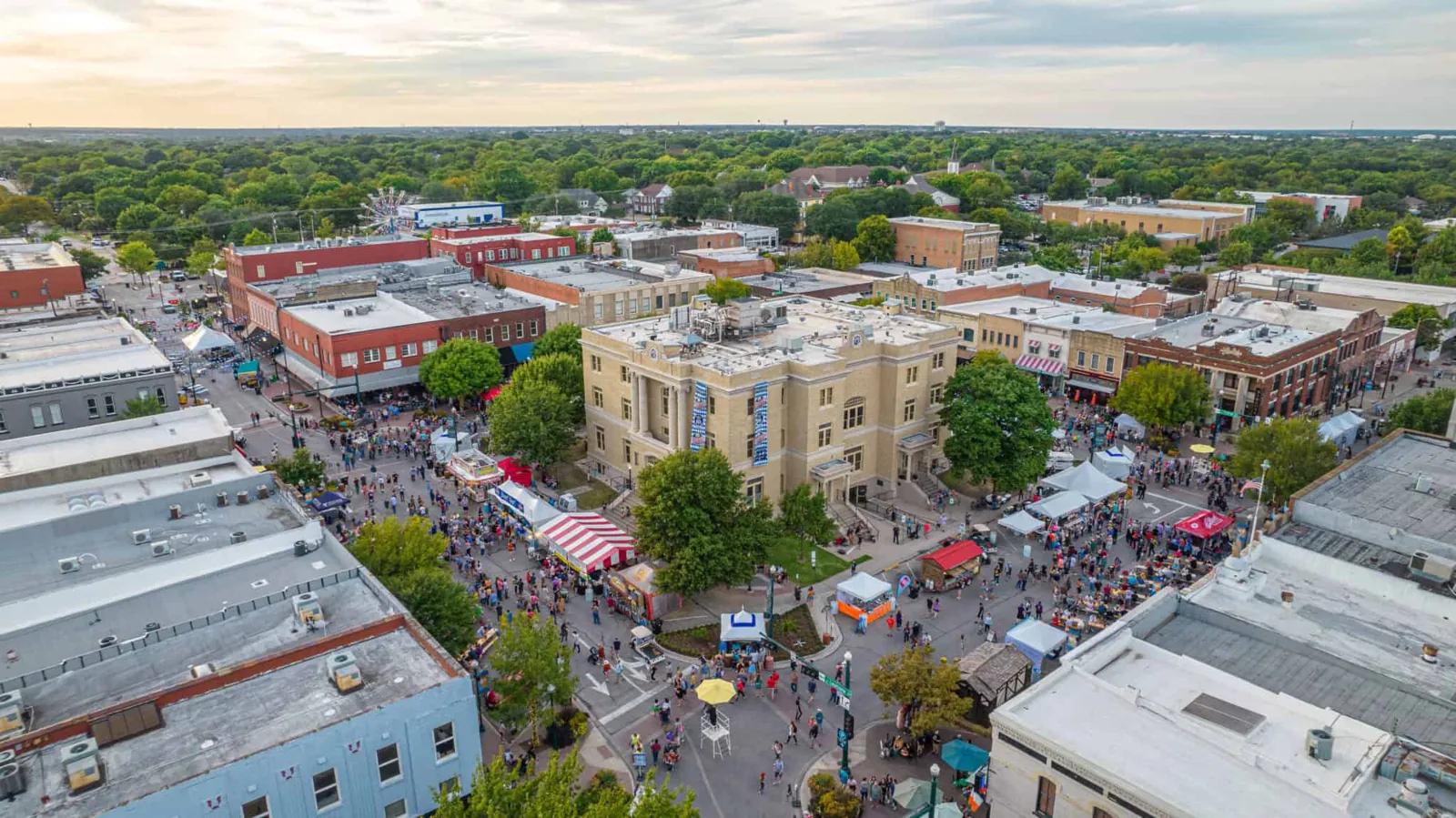
Review a Holcim commercial roof by sheet, attachment, and substrate before pricing a tie-in. Set the work window around McKinney access and weather.
Tell us about the building and what you are seeing. We reply with the next practical step.
A repair at a former Firestone roof can involve more than one product generation. Records may carry an earlier company or product label, while the visible membrane reflects a later repair or recover. We verify the sheet, seam, flashing, and substrate before choosing a compatible tie-in. That field check prevents an old label from setting the repair boundary for a roof that has changed.
On a McKinney building, the work area also has to fit access and operations. McKinney combines office and industrial parks with retail districts; a former Firestone roof still needs its own loading route, lift position, and occupancy window confirmed at the site. We ask for the roof plan and a site contact, then identify which zone can be opened and closed during one shift. The scope follows that sequence as well as the membrane condition.
Gather submittals, prior repair tickets, and any closeout notes that identify the original assembly. Compare them with accessible edges, seams, curbs, drains, and patches. If one section has been recovered, record the upper membrane separately from the lower layer. A label can help locate product information, but it does not show what a later contractor installed across the entire roof.
For a thermoplastic assembly, inspect the welded field seams and their transitions; for EPDM, verify the splice and flashing method. Asphaltic sections need their own lap and surfacing review. We map each material by roof zone so a mixed system does not receive one generic repair instruction. The commercial inspection notes what is visible and which concealed question may require an owner-approved opening.
A patch belongs on a clean, stable surface. Remove failed material only to the point where the existing membrane and substrate can support a new connection. At a curb, inspect corners, the membrane return, top termination, and equipment movement together. At a parapet, follow the flashing behind the coping and check whether the edge metal is loose. The repair plan should show the tie-in and identify the step used to verify it.
For temporary work between shifts, show the existing membrane, the new material, and the edge that must be reopened on the next visit. Photograph that tie-in before leaving and record any condition that limits access. A clear stop line matters when the building remains occupied overnight, because the next crew needs to know exactly where the permanent detail begins.
When a pipe or unit has been moved, the opening may no longer match the original detail. Coordinate with the mechanical trade before closing the penetration. A flashing inspection should record the new opening, changed support, and area where the roof remains intact. If moisture is suspected under the sheet, a moisture survey can prioritize test cuts, while the opening confirms only its sampled area. That distinction keeps the removal scope tied to evidence.
DFW normals list average daily highs above 95 degrees in July and August. Heat affects surface temperature, adhesive handling, and the length of a safe open-work period. We check the actual roof and product requirements before setting the tear-off limit. If conditions shorten the production window, the crew reduces the area exposed and maintains a secure temporary closure at the shift boundary.
The National Weather Service places the Metroplex’s strongest severe-weather concern in spring; agree on a hold point that leaves no roof opening exposed if storms approach. A storm alert changes staging and closeout, even when a roof has not yet been inspected. When active entry threatens equipment or stored materials, request emergency help at any hour and provide the affected zone plus the site’s access requirements. Permanent work follows the field review. A property near US 75 and FM 543 may have different loading limits than a building in Historic Downtown. Confirm the actual truck approach and crew access with the site contact.
Repair may fit when the defect is local, the membrane remains sound around it, and moisture does not extend beyond the opening. Repeated seam failures, a damaged deck, or wet insulation can make a broader removal plan worth comparing. We list the roof sections, removal boundary, insulation, edge details, drains, and equipment coordination. Concealed conditions stay separate until an opening confirms them.
McKinney’s adopted-code information includes the 2024 International Building Code with local amendments; confirm the permit requirements with the building official before finalizing details. A replacement assessment should also state daily tie-ins and approval points. Compare a Sika Sarnafil assembly or a Carlisle SynTec system against the same deck, insulation, attachment, and flashing assumptions. That shows which scope fits the building instead of letting a brand decide the answer.
Choose a staging area that does not block loading, customer access, or required exits. The site contact should identify roof entry, escorts, equipment shutdowns, and notice requirements before the crew mobilizes. If another trade needs the same lift or roof route, put that sequence on the schedule. We mark the work zone and explain where the crew will handle material and how the area below will be protected.
For a phased reroof, close each section to a stable edge and photograph the tie-in before leaving. A phased occupied-building plan names the areas that remain in service and when noise or access changes. If removal reveals a different layer or damaged deck, the project lead receives the finding before the limit expands. That keeps the daily plan usable for both operations and the roofing crew.
At closeout, record which membrane and details were repaired, the preparation used, and the result of the seam or flashing check. Photos should identify each roof zone and show the condition before it was covered. Note any temporary work and the follow-up needed. If a later trade moves equipment or adds a penetration, update the map so a future inspection starts at the changed detail.
Provide leak dates, prior repairs, the roof plan, and site access notes before a visit. We will compare the records with the exposed assembly and state what remains unknown. When water is entering, tell us which room is affected and whether equipment needs protection. The response can then be sequenced around the operating area, while the permanent scope waits for a field-checked repair boundary.
Send the roof plan, prior product records, leak location, and operating schedule. We will verify the installed layers and define a field-based repair or replacement scope.
Short answers to what owners and facility managers ask before a roof visit.
It may identify the original or specified assembly. We compare it with exposed sheet, repairs, and transitions because a later recover or patch may have changed the surface. The roof map records each observed layer and any area that still needs confirmation.
First verify the membrane and prepare a sound edge. The detail, substrate, and nearby movement determine the repair method. If the surface has coating or repeated patches, we test preparation before defining the full repair area.
We photograph the layers, note the location, and pause at the approved boundary. The project lead reviews the finding and price before the crew expands removal. The change is then recorded on the roof-zone plan.
Compare replacement when moisture, deck damage, or repeated failures extend across multiple zones. The estimate should list removal, insulation, edges, drains, and equipment work. A localized failure on a sound field may still support repair.
Yes. For a leak threatening tenant space or equipment, give us the roof zone and access contact. Emergency coverage operates nights, weekends, and holidays; the first visit addresses exposure control, with permanent repairs scoped separately after inspection.
Send a question about the building and we will reply. Or call 555-555-5555.