Document public-building roof conditions in McKinney with clear access plans, code coordination, repair boundaries, and closeout records for agency review.
Tell us about the building and what you are seeing. We reply with the next practical step.
A public building roof scope has to be traceable from the first observation through approval and closeout. For cities, counties, and agencies in McKinney, we begin with the building contact, roof access, reported condition, and decision date. The City lists office and industrial parks, retail districts, and principal routes including US 75, SH 121, and US 380. Those facts orient the market; each public facility still needs its own route, operating limits, and roof record.
Among McKinney's adopted codes are the 2024 International Building Code and the International Energy Conservation Code with local amendments. The permit and project scope determine what applies, so the agency's design team confirms the current code requirements. We document the roof conditions and provide system information that can support that review.
A useful request starts with the decision: emergency protection, a targeted repair, inspection, or capital planning. We review available roof plans, prior service records, warranty documents, photographs, and any stated performance requirements. The field walk then records membrane, seams, penetrations, flashing, drains, edges, and equipment transitions by zone. Photos and measurements give the agency a basis to compare the proposal with the observed condition.
When an area is inaccessible or the assembly is concealed, the record states that limit. It identifies what additional access, testing, or controlled opening could resolve the question. This is useful for bid comparison because confirmed quantities remain separate from allowances for unknown material. A proposal also states whether roof protection, temporary termination, interior measures, or another trade must be coordinated.
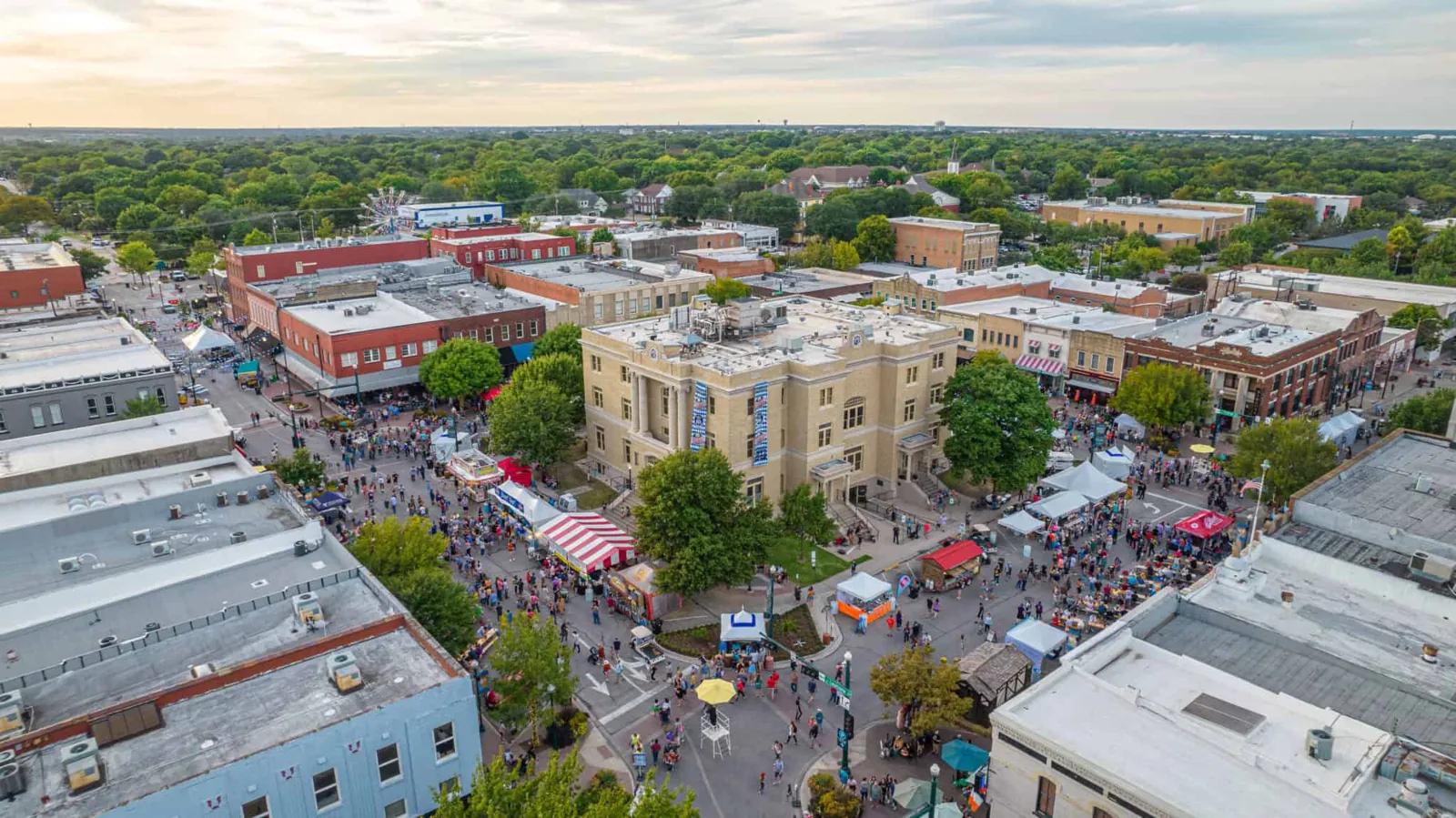
McKinney's business district map identifies locations including Custer Road, Lake Forest Drive, North US 75, and Historic Downtown. These are broad commercial areas, not assumptions about any government building. An agency property near US 75 and FM 543 still requires a site-specific staging and access check before a crew is assigned.
The site contact identifies staff and public entrances, restricted rooms, delivery lanes, equipment, and work hours. We confirm the roof entry, lift placement, staging, and material route before mobilization. If the building stays open, the work zone may need interior protection, signage, noise planning, or a phased sequence. The agency sets its access and communication procedures; we place them in the work plan.
A leak in a public-facing room may require immediate protection while a permanent repair is scoped. We photograph the affected area, trace the likely water path, and identify what remains uncertain. Our emergency roof response is available around the clock, including holidays, for urgent exposures. Temporary protection is recorded separately so the agency can distinguish stabilization from completed repair.
Where a contractor or facility team must isolate equipment, move a line, or release an area, we identify the approval point before the roof is opened. This keeps field changes from bypassing the agency's authorization process. Related general contractor coordination can help align roofing access with other scheduled trades, while school district work planning addresses occupied education facilities with different operating windows.
A ceiling mark can be away from the roof entry. We compare its location with nearby seams, curbs, wall transitions, penetrations, and drains, then photograph the evidence that supports a likely path. If the entry cannot be confirmed visually, we state what test or opening could help. A repair area should not expand just because the interior symptom is broad.
Drainage review follows the outlet and the roof surface leading to it. We note visible blockage, displaced strainers, damaged flashing, debris, and standing water observed during the visit. DFW climate normals show substantial regional precipitation, including 4.78 inches in May. That context makes drainage a practical inspection item, but it does not establish a defect at a particular agency building.
Severe weather in DFW peaks in spring, with hail and damaging wind among the risks. When an event is reported, the actual property gets inspected and compared with whatever pre-event records exist, and the record describes what can be seen. A forecast or regional notice does not establish impact at every public building. The record separates visible damage, older wear, and questions that need further investigation.
McKinney lists 2024 IBC and IECC editions with local amendments among its adopted requirements. The building official, permit documents, and project design confirm the code set applicable to a given scope. We can document the existing roof assembly, proposed materials, and details for review, but a generic roofing note cannot determine the permit's requirements.
A repair scope describes the work boundary, preparation, materials, tie-in, access, protection, cleanup, and approval for concealed conditions. For replacement, the records may also identify tear-off limits, insulation, penetrations, edge details, and phasing. A government building roof assessment can organize those issues for review, and a commercial roof inspection can establish the condition record before a larger procurement.
For bid comparison, the agency can separate immediate stabilization, permanent correction, and optional testing into distinct scope items. We identify assumptions for access, protection, and material tie-in so proposals can be compared against equivalent work. Each alternate should name the roof zone and condition it addresses. That keeps a field change from becoming an undefined expansion.
Cost and timing depend on roof area, assembly, access, moisture extent, material availability, weather, and occupied use. We state these factors in the proposal and keep measured work separate from contingencies. If an opening reveals a concealed condition beyond the approved boundary, the crew documents it and requests direction before proceeding.
The closeout file identifies roof zones inspected, photos, materials documented, work completed, field changes, and any area that remains open for follow-up. It connects the finished detail to the approved scope and records temporary protection if it is still in place. That gives the agency a clear record for facilities staff and later procurement.
A roof condition report can prioritize observed items and list further testing needs. preventive maintenance can assign recurring checks for drains, flashing, and repairs. If an agency manages several sites, the same reporting format can be applied while keeping each building's findings separate.
Share the building contact, decision schedule, roof files, and access limits. We can map the work area, provide a documented repair or capital scope, and return a closeout record that the agency can connect to its approval and maintenance process.
Send the building contact, reported condition, roof files, decision date, and access requirements. We will document the roof and define a scope with measurable work and stated assumptions.
Short answers to what owners and facility managers ask before a roof visit.
Include the building contact, reported location, roof plan, prior work, access rules, desired decision date, and any permit or procurement requirements already identified. We can then define the inspection and scope.
We state what was accessible, the evidence observed, and the test or controlled opening that could answer the question. Any allowance remains distinct from confirmed quantities.
The building official and the permit documents confirm which editions and amendments apply to the project and its scope, and the agency's design team carries that decision.
Emergency response is available at any hour, including holidays. We document the temporary measure, remaining exposure, and permanent work still requiring approval.
The closeout includes photos, work boundary, materials documented, field changes, approval notes, and follow-up items. It should identify what is complete and what remains open.
Send a question about the building and we will reply. Or call 555-555-5555.